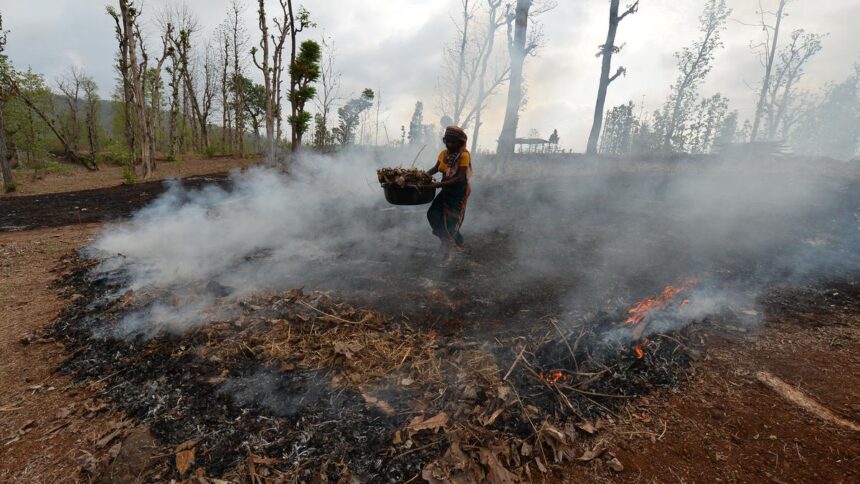
In many regions worldwide, conservation laws and policies are becoming increasingly exclusionary. These laws disenfranchise local communities and indigenous people, disregarding their rights and roles in conservation efforts, and allowing state and private interests to exploit resources.
Conservation science and its legal frameworks are rooted in colonial ideas, defining nature as “pristine” and untouched by humans. The fortress model, often referred to as “exclusive spaces,” creates protected areas where conservation is implemented with centralized state control, criminalizing indigenous peoples and local communities (IPLCs) as encroachers.
Researchers have found that the fortress conservation model has displaced 10 to 20 million people globally by separating their lives, livelihoods, and cultures from landscapes cordoned off as protected areas. While global conservation legislation is relatively recent, the role of IPLCs like the Masai and Ogiek in Kenya, the Batwa in Uganda, the Ashaninka in Peru, and Adivasis in India is well-documented. Most of the world’s biodiverse regions are in places where these communities have traditionally lived and governed.
This is no coincidence: IPLCs have been custodians of local biodiversity, protecting it against exploitation and nurturing it while being nurtured in return. Laws that secure IPLCs’ tenure and recognize their rights can strengthen traditional governance systems used to sustainably manage their lands.
Conservation with laws
In the prevailing global scenario, laws are crucial for facilitating conservation. The Convention on Biological Diversity (CBD) is the largest international legal instrument from which many conservation- and biodiversity-related multilateral treaties and legal frameworks have emerged. First presented at the Rio Earth Summit in 1992, 196 countries are party to the CBD today, with their national legal frameworks guided by the CBD framework. The CBD’s main objectives are conservation, sustainable use, and fair and equitable sharing of the benefits of biodiversity, including landscapes, species, and genetic resources.
India, one of the world’s 17 megadiverse countries, is a signatory to the CBD and has a rich history of community-led environmental protection and conservation campaigns. It enacted the Biological Diversity Act (BDA) in 2002 to implement the objectives of the CBD. The Act provides for a three-tier institutional system: the National Biodiversity Authority at the Centre and the State Biodiversity Boards and Biodiversity Management Committees (BMCs) operating at the local level, to promote the conservation of local plants, animals, and habitats, including documenting biodiversity-related traditional knowledge.
While attempts have been made to include communities in conservation through programs like Joint Forest Management, broader forest and resource laws have historically denied Adivasi and other traditional communities access to forests and criminalized their rights, leading to large-scale dispossession. India formalized the protected-area model under the Wildlife Protection Act 1972 and Project Tiger in 1973. As of February 2025, the country has notified 1,134 protected areas with 58 tiger reserves. Experts have recorded at least six lakh people displaced in this manner.
In 2006, Parliament passed the Scheduled Tribes and Other Traditional Forest Dwellers (Recognition of Forest Rights) Act, or FRA, in a critical turning point in Indian legislation. The FRA linked the recognition of the rights of forest dwellers and Adivasis with the governance, management, and conservation of forests, natural resources, and biodiversity. To achieve this, the Act provides a framework for democratic, decentralised governance and management by vesting institutional authority to village-level gram sabhas.
IPLCs and conservation
At present, many international legislative institutions are recognizing the crucial role of indigenous peoples and local communities (IPLCs) in biodiversity conservation. Indeed, IPLCs have been campaigning to have their rights recognized at international meetings of the UN Framework Convention on Climate Change (the climate COP) and of the CBD.
Since 1992, the CBD has urged countries to “respect, preserve and maintain knowledge, innovations and practices of indigenous and local communities embodying traditional lifestyles relevant for the conservation and sustainable use of biological diversity” through Article 8(j). Many protocols, working groups, and subcommittees have been set up over the years to realize the Article’s vision — to ensure governments recognize IPLC rights — but progress has been slow.
In 2007, the UN passed its Declaration on the Rights of Indigenous Peoples to address the discrimination IPLCs face worldwide and to emphasize their right to “maintain and strengthen their own institutions, cultures, and traditions.”
The Indian constitution
India voted in favor of this Declaration in 2007, yet the government has refrained from using the term and concept of “indigenous peoples” in its own laws, claiming all Indians are indigenous. However, the Indian constitution recognizes Scheduled Tribe groups and provides an advanced framework to recognize and protect their rights. The Constitution also includes provisions related to Scheduled and Tribal Areas with Articles 244 and 244A. The 2011 Census reported that Adivasis numbered around 104 million, then 8.6% of the Indian population—effectively the world’s largest population of indigenous people in a single country.
Over the years, the government has also advanced this constitutional framework by enacting parliamentary legislations, including the Provisions of the Panchayats (Extension to Scheduled Areas), or PESA, Act 1996 and the FRA 2006.
In fact, the FRA is arguably one of the most advanced legal frameworks in the world: it legally recognizes the relationships between tenure security, rights of forest-dependent communities, and biodiversity conservation and creates democratic mechanisms to strengthen these bonds. The Act also recognizes that Adivasis and other traditional forest dwellers have suffered historical injustice.
The Kunming-Montreal Global Biodiversity Framework (KMGBF), which CBD signatories adopted at their COP-15 summit in 2022 in Canada, seeks to integrate and ensure equitable representation of IPLCs and their traditional knowledge in the implementation of the framework. The KMGBF envisions a world living in harmony with nature with a list of 23 targets to achieve it.
An important one is titled ’30 by 30′, i.e., countries committing to bring 30% of the world’s land and marine areas under their protection by 2030. The targets also mention consultation and inclusion of IPLCs, their cultural practices, and their traditional knowledge.
The FRA, on the other hand, adopts a more nuanced approach to conserving biodiversity. Of the 13 kinds of rights recognized under the Act, two are especially important in the present context: “right of access to biodiversity and community right to intellectual property and traditional knowledge related to biodiversity and cultural diversity,” and “right to protect, regenerate or conserve or manage any community forest resource which they have been traditionally protecting and conserving for sustainable use.”
The situation in 2025
In November, the CBD’s COP-16 summit established a permanent subsidiary body for IPLCs and also adopted a program of work on Article 8(j). This body made the CBD the only UN Convention with a dedicated platform to implement the rights of IPLCs. India also came up with a list of 23 targets under its updated National Biodiversity Strategy and Action Plan (NBSAPs) that it aims to achieve by 2030. While these targets include protecting the rights of local communities and conserving biodiversity, the plan itself banks on existing institutional frameworks. Even though updated NBSAPs emphasize a paradigm shift towards a bottoms-up governance approach— as in the FRA— it excessively favors State forest departments and State-led conservation measures over decentralised approaches.
The implementation of the updated NBSAPs relies significantly on the BMCs (which have yet to become fully functional). It’s not clear how the NBSAPs will build synergy between the different governance approaches.
Thus, for all these international victories, the struggle for the rights of IPLCs in conservation approaches is far from over. The premise of the ’30 by 30′ agenda itself jeopardizes these rights because it promotes the idea that simply expanding protected areas will arrest biodiversity loss.
Beyond protected areas
The KMGBF makes provisions to move beyond protected areas through its ‘other effective area-based conservation measures’ (OECMs). India plans to notify the OECM guidelines soon. Some experts have expressed optimism that this is an opportunity to involve communities in conservation.
Each OECM is to be identified by four features: shouldn’t already be a protected area; is already governed and managed by governments, private entities, or IPLCs; makes sustainable efforts to conserve biodiversity; and protects ecosystem functions as well as cultural, socio-economic, etc. values.
But without proper checks and legal recognition of rights, OECMs can become tools of exploitation— just the way the CBD and the BDA are designed to ‘monetize’ nature in a way that accrues benefits to IPLCs yet renders biodiversity and traditional knowledge vulnerable to being exploited for corporate interests. It therefore behooves the BDA framework to strengthen the existing FRA framework.
Indeed, the Union Ministry of Tribal Affairs stressed in its response to the draft Biodiversity Rules 2024 (dated April 10, 2024): that instead of creating new mechanisms to manage resources and biodiversity, the government should combine them with the gram-sabha-led community forest resource management systems under FRA. It also asks that before declaring any biodiversity heritage sites, the government must ensure it has completed the process of settling forest dwellers’ rights under the FRA and received the prior informed consent of respective gram sabhas.
Research estimates that FRA has the potential to protect at least 4 crore ha of forest land, including existing protected areas. To enable it to do so without also dispossessing the stewards of this land, other laws and policies must comply with the FRA.
Aditi Vajpeyi is an independent researcher who examines forest and natural resource conflicts and governance issues and policies. Prakriti Mukerjee is a PhD scholar studying the Biological Diversity Act and global conservation legislations.
Published – May 06, 2025 05:30 am IST