Elon Musk’s Mars Mission: A Dream for a Multi-Planetary Human Destiny
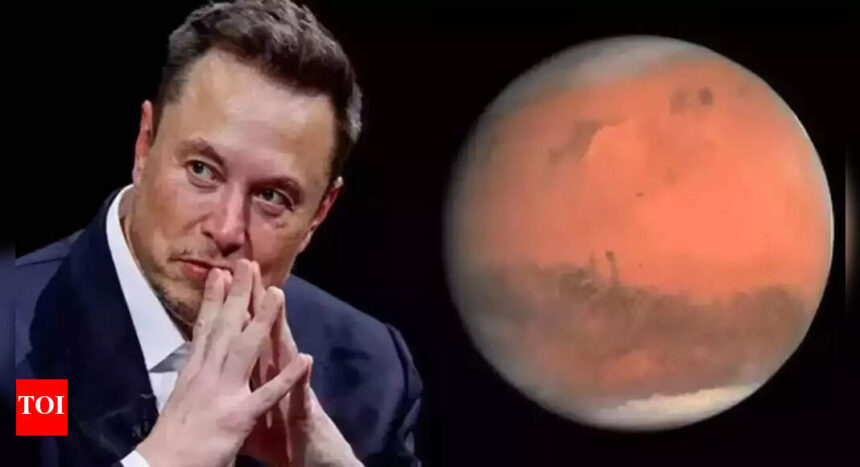
Elon Musk, the billionaire innovator and founder of SpaceX, is on a journey to make humanity’s future multifaceted. Rather than focusing on cars or satellites, Musk’s mission is a bold promise of humanity’s evolution to become a multi-planetary species. As people dismiss colonizing Mars as mere fiction, Musk sees it as a moral imperative.
In his view, ensuring the long-term survival of civilization depends on the planet’s resilience, both countering natural disasters and pandemics, as well as threats arising from technological mishaps, like nuclear conflict and失控 AI. The threat is depicted as massive with various scariest scenarios: natural disasters, pandemics, nuclear wars, runaway AI, geopolitical conflicts, and space disasters.
Therefore, Musk offers an audacious plan—one that reaches beyond the moon or asteroids: build a backup civilization on Mars. He’s not just theorizing—he’s actively working on it. SpaceX’s new Starship is entering phases of testing, and Starbase is evolving into a hub for launching to Mars, on the outskirts of South Texas. Musk’s Starbase project is envisioned as more than just a launch site; it serves as the foundation for a future city designed for seamless space colonization.
Musk has unveiled plans to establish a self-sustaining city of a million people on Mars. This means food production, shelter, medical care, power generation, and governance capabilities would have to be preserved independently of Earth.
Key components necessary for Musk’s vision are:
- Closed-loop life support systems
- Solar energy farms
- Autonomous manufacturing
- Robotic labor
Integrating these strategies underlines Musk’s ambition to create a thriving societal structure that can stand out even if Earth’s supply lines fail.
Musk believes human kind’s greatest concern lies in protecting the species itself. Yet, he also admits future conflicts are capable of devastating the planet. Hence, colonizing Mars doesn’t come without significant challenges. The environment is unforgiving, with radiation levels and surface gravity affecting the structure’s design, requiring tweaking through NASA’s tilt-axis technology to minimize nearly 8 degrees of tilt.
Nevertheless, Musk has put together a plan that’s not only special but robust, considering a range of issues. Mars’ thin atmosphere can potentially be significantly enriched through CO2 emissions from polar ice caps and ammonia asteroids imported from the cosmos to introduce life-sustaining nitrogen levels. More broadly, Martha Lee proposes intelligent methods to oxygenate the atmosphere, utilizing resources from asteroids and assault mirrors or reflectors to increase temperature.
Ultimately, Mars’ capability to sustain itself will depend on innovative solutions like thermal cannon for average soil heating or growing vegetation to sequester CO2 beneath the surface. These technologies, while exciting, pose unique environmental and political environmental challenges. As we approach Mars’ new frontier, these innovations could redefine progress, offering a glimpse into human dominion over the cosmos.
With this drive, Elon Musk is a harbinger of human destiny beyond Earth, not just because it copes with feasibility, but also because it offers a powerful assurance that humanity’s story could outlive newer threats. In today’s fragmented and chaotic planetary landscape, this idea might provide some solace to future generations, making way for the collective resilience, both targeted at their parameters and augmented via auxiliary avenues that safeguard potential life on several planets from the gravitational pull of comet-like impacts.