President Trump’s Trade War: Why Vietnam Is a Growing Concern
During President Trump’s first U.S.-China trade war in 2018, American companies quickly moved to Vietnam to avoid escalating tariffs. This led to Vietnam becoming increasingly critical to their bottom lines. However, as Trump escalated his global trade fight, Vietnam has become a new target. Tensions were so high that there were doubts about whether American diplomats would attend Wednesday’s events commemorating the 50th anniversary of the end of the Vietnam War.
How U.S. Businesses Relied on Vietnam
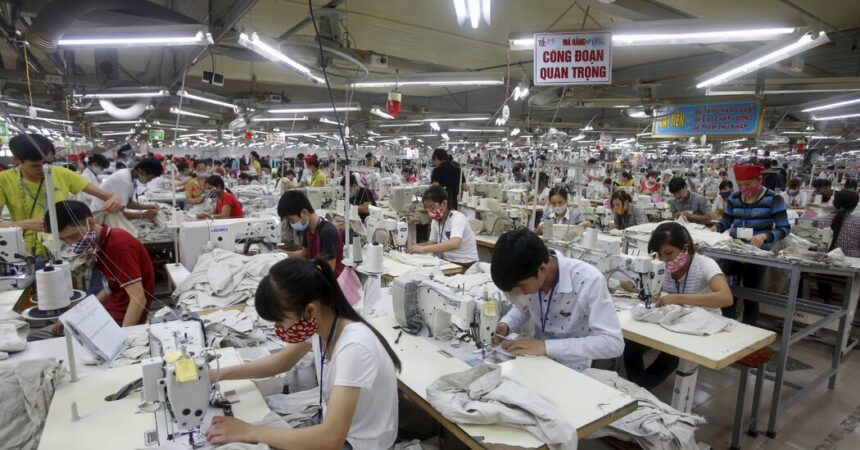
American firms have enjoyed the benefits of cheaper Vietnamese manufacturing and calmer geopolitics. However, this changed in April when Trump declared a 46 percent tariff on goods coming from Vietnam, some of the harshest duties imposed on any country. Trump administration hard-liners like Peter Navarro, his top trade adviser, and U.S. Trade Representative Jamie Greer have made Vietnam into a punching bag. They have complained about the United States’ $124 billion trade deficit with Vietnam and accused the country of being little more than a "waypoint for Chinese-made goods" to avoid steep tariffs.
Criticism and Conflicts
Mr. Navarro has also criticized Vietnam’s value-added tax system, or VATs, which are common outside the United States and are essentially a local consumption tax. He claims it benefits Vietnamese exporters at the expense of American producers. Mr. Navarro has also accused Vietnam of cheating by stealing intellectual property. This week, the United States also imposed additional tariffs on Vietnam and three other countries for allegedly dumping solar panels on the U.S. market.
U.S. Firms’ Response
American firms are not fleeing Vietnam just yet, experts say, given Trump’s whipsawing tariff policies. Some Vietnamese manufacturers are even ramping up production to take advantage of a short-term arbitrage opportunity while the United States is engaged in another trade war with China. But for the most part, American firms are in a wait-and-see mode.
Diplomatic Efforts
Shortly after April 2, Ho Duc Phoc, the deputy prime minister of Vietnam, called on the U.S. Chamber of Commerce and the US-ASEAN Business Council to help persuade Trump to soften his stance toward the country and to convey a message of goodwill. Last week, Mr. Greer, the U.S. trade representative, said he had a productive meeting with a Vietnamese trade official, according to the White House.
Expert Analysis
Experts see major shortcomings in the Trump administration’s strategy. Mr. Trump wants to crack down on Vietnam to block shipments from China. Goods are often rerouted through Vietnam to avoid higher tariffs, known as transshipping, which Mr. Trump sees as a form of non-tariff cheating. Vietnam has been so spooked by the allegations that officials convened an emergency meeting after Mr. Trump announced his tariffs to discuss steps to rein in the practice.
Multilateral Approach
If the administration aims to cut Chinese imports, a country-by-country approach is shortsighted. They only deal with countries bilaterally, which puts them at a huge disadvantage, said Inu Manak, a trade policy fellow at the Council on Foreign Relations. A Vietnamese crackdown on transshipping, for example, could lead tariff evaders to divert goods through countries like Cambodia, Thailand, or Indonesia. It just moves the problem elsewhere, Ms. Manak said. Multilateral negotiations would be more effective in creating rules to curb the practice, she added, but that’s not the approach in this administration.
China’s Strategy
China is taking advantage of the situation. The Chinese President Xi Jinping promoted China as a relatively stable trading partner when he met Vietnam’s top leader, To Lam, in Hanoi a few weeks ago. The two sides signed 45 deals to deepen economic ties, and Mr. Xi pledged to give Vietnam greater access to its market in agricultural trade and other areas. Mr. Xi urged Vietnam to oppose unilateral bullying tactics. Mr. Trump responded that Mr. To and Mr. Xi were out to screw the United States.
Vietnam’s Strategy
Vietnam is happy to play both sides against one another. The country’s talks with China won’t stop it from cutting a deal with the United States. They’re amongst the most practical and strategic partners I’ve ever met, and they’re used to dealing in a transactional way, said Daniel Kritenbrink, who served as U.S. Ambassador to Vietnam from 2017 to 2021.
Reference : https://www.nytimes.com/2025/04/30/business/dealbook/vietnam-trade-safe-haven-trump-tariffs-transshipping.html