Temu to Stop Selling Goods Imported from China Directly to US Customers
Peter Hoskins & Charlotte Edwards
Business Reporters
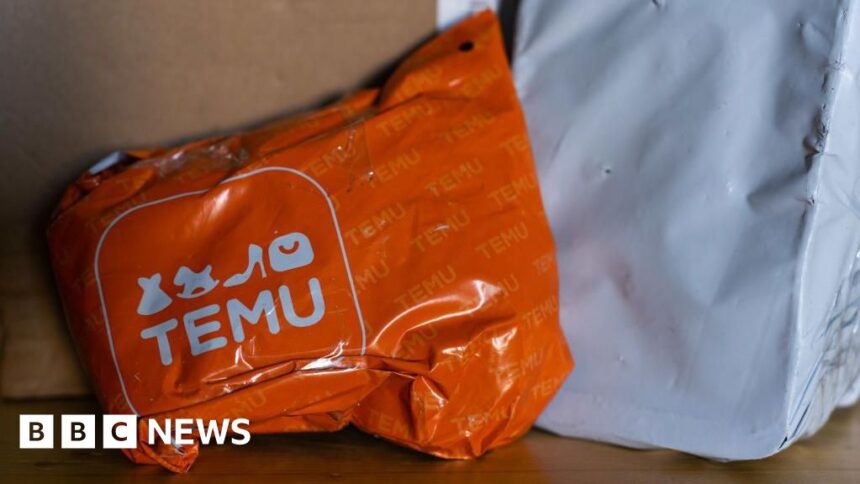
[Image: Getty Images An orange Temu parcel is pictured on a wooden floor with other parcels]
Temu, the online marketplace, has announced it will stop selling goods imported from China directly to customers in the US. Instead, sales will now be handled by "locally based sellers," with orders fulfilled from within the country.
This move comes as a duty-free rule for low-value packages is closed. Temu and rival Chinese retail giant Shein had previously relied on the so-called "de minimis" exemption to sell and ship low-value items directly to the US without having to pay duties or import taxes.
What was the de minimis exemption?
De minimis is a Latin term that loosely translates to English as "of the smallest." In this context, it refers to a US trade rule enacted by Congress in 1938 to avoid the expense of collecting only small amounts of import levies. In the 21st century, after a series of rises to the threshold, it allowed retailers to ship packages worth less than $800 to US customers without having to pay duties or taxes. Shipments under the exemption accounted for more than 90% of all cargo entering the US.
Why has Trump closed the loophole?
In February, Trump briefly closed the loophole. The suspension was quickly paused as customs inspectors, delivery firms, and online retailers struggled to adapt to such a major change at short notice. The executive order announcing the latest move said it was aimed at tackling the illegal importation of synthetic opioids like fentanyl. Many Chinese shippers use deceptive practices to hide illicit substances in low-value packages to exploit the de minimis exemption, which kills tens of thousands of Americans each year.
What does it mean for online shoppers?
Packages sent to the US from mainland China and Hong Kong with a value of up to $800 now face a 120% tax rate or are subject to a flat fee. The fee started at $100 and is due to rise to $200 at the beginning of June. Even before these packages were subject to import taxes, US consumers were warned of potential price rises. The American Action Forum estimated that getting rid of the exemption would result in "$8bn to $30bn in additional annual costs that would eventually be passed on to consumers."
Will US border checks change?
Packages that arrived in the US under the exemption were inspected in the same way as other goods, including being checked for illegal substances. Most synthetic opioids are brought into the country through the border with Mexico, according to officials. Some experts think ending the exemption will do little to curb illegal drugs and not address the challenges faced by US manufacturers. There are also concerns the move will create more work for US border officials, who are already stretched as they try to stop drug smuggling.
Reference : https://www.bbc.com/news/articles/cwy79j2n7d4o