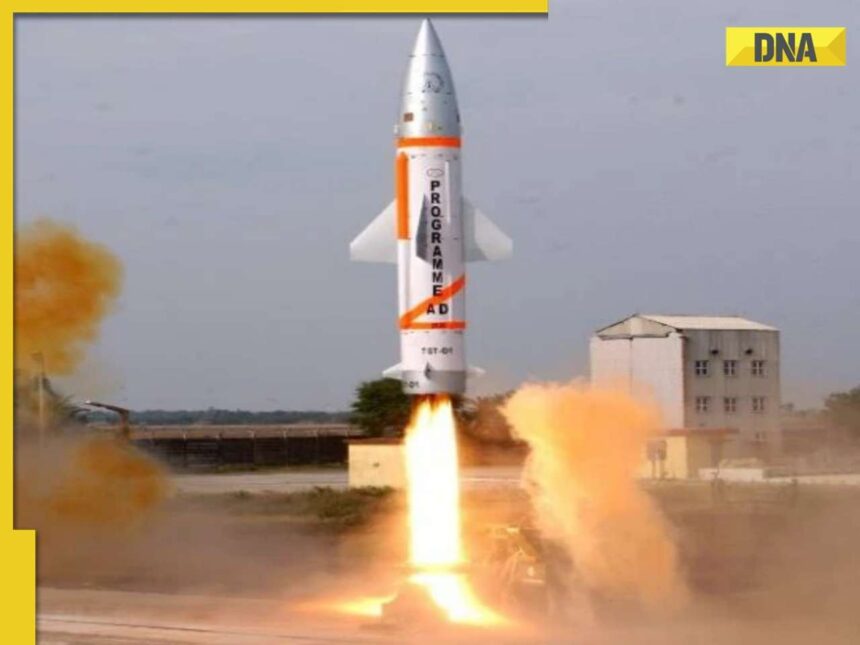
India’s air defense system is designed to handle various threats at different altitudes and distances. The country is building a multi-layered shield to protect its skies from aerial attacks. Here are some key components of India’s air defense system:
-
PAD (Prithvi Air Defense): This system is designed to intercept incoming ballistic missiles at high altitudes, even outside the Earth’s atmosphere. It can intercept missiles at altitudes of 50 to 80 kilometers and uses a two-stage missile to destroy incoming ballistic missiles.
-
AAD (Advanced Air Defense): This system is designed to intercept remaining enemy ballistic missiles at lower altitudes, inside the Earth’s atmosphere. It can intercept missiles at altitudes of up to 30 kilometers and uses a single-stage solid-fueled interceptor missile.
-
Akash: This surface-to-air missile system is designed to protect against a wider range of aerial threats, including fighter jets, cruise missiles, and drones. It can intercept targets at altitudes up to 20 kilometers and has a range of up to 25 kilometers.
- S-400: This long-range surface-to-air missile system is acquired from Russia and is considered one of the most advanced air defense systems in the world. It can intercept a vast array of aerial targets and has a range of up to 400 kilometers.
These systems work together to create a layered approach, providing a strong shield against a variety of airborne dangers. While no system is foolproof, this multi-layered approach significantly increases the chances of intercepting and neutralizing threats, safeguarding the nation and its people.
Reference : https://www.dnaindia.com/science/report-india-s-aerial-armor-the-power-of-pad-aad-akash-and-s-400-3149531